
Free 360 feedback tools: what you get and what you don't
Read more Tool Selection

The right feedback style has less to do with someone’s personality than with one measurable thing: the gap between how they rate themselves and how their peers actually rated them.
Picture two reports getting the same piece of critical feedback from the same manager. One nods, says thanks, and moves on. The other pushes back hard and won’t accept it without three concrete examples. Same manager, same words, same critical feedback, wildly different reception. The difference isn’t personality. It’s whether each person’s self-rating already matched what their peers were saying, or whether it was miles off.
That gap sorts into four practical cases, and each one calls for a different opening move. Here’s how to read it, and what to do once you have.
Key takeaways
- The gap between someone’s self-rating and what their peers actually rated them matters more before a feedback conversation than their personality or a generic communication style.
- Someone who rates themselves higher than their peers do needs concrete, evidenced feedback on their weak spots; vague praise only confirms the gap.
- Someone who rates themselves lower than their peers do needs genuine strengths named first, with growth areas delivered one at a time instead of stacked together.
- People who only trust evidence need the same concrete treatment regardless of their self-rating; this is a communication-style axis, separate from the rating gap itself.
- A short written recap after every conversation, two or three sentences, is what actually turns a single conversation into a development plan.
Every structured review already contains this number if you look for it. Ask the same competency questions to the reviewee and to their peers, and you get two figures back: a self-rating and a peer average. The distance between them tells you more about how to open a conversation than any personality framework will.
Psychologists have a name for a version of this gap: the Johari window, which sorts what you know about yourself against what others know about you into four panes. You don’t need the full model to use this. You need one number: how far off is this person’s self-view from what their peers actually said.
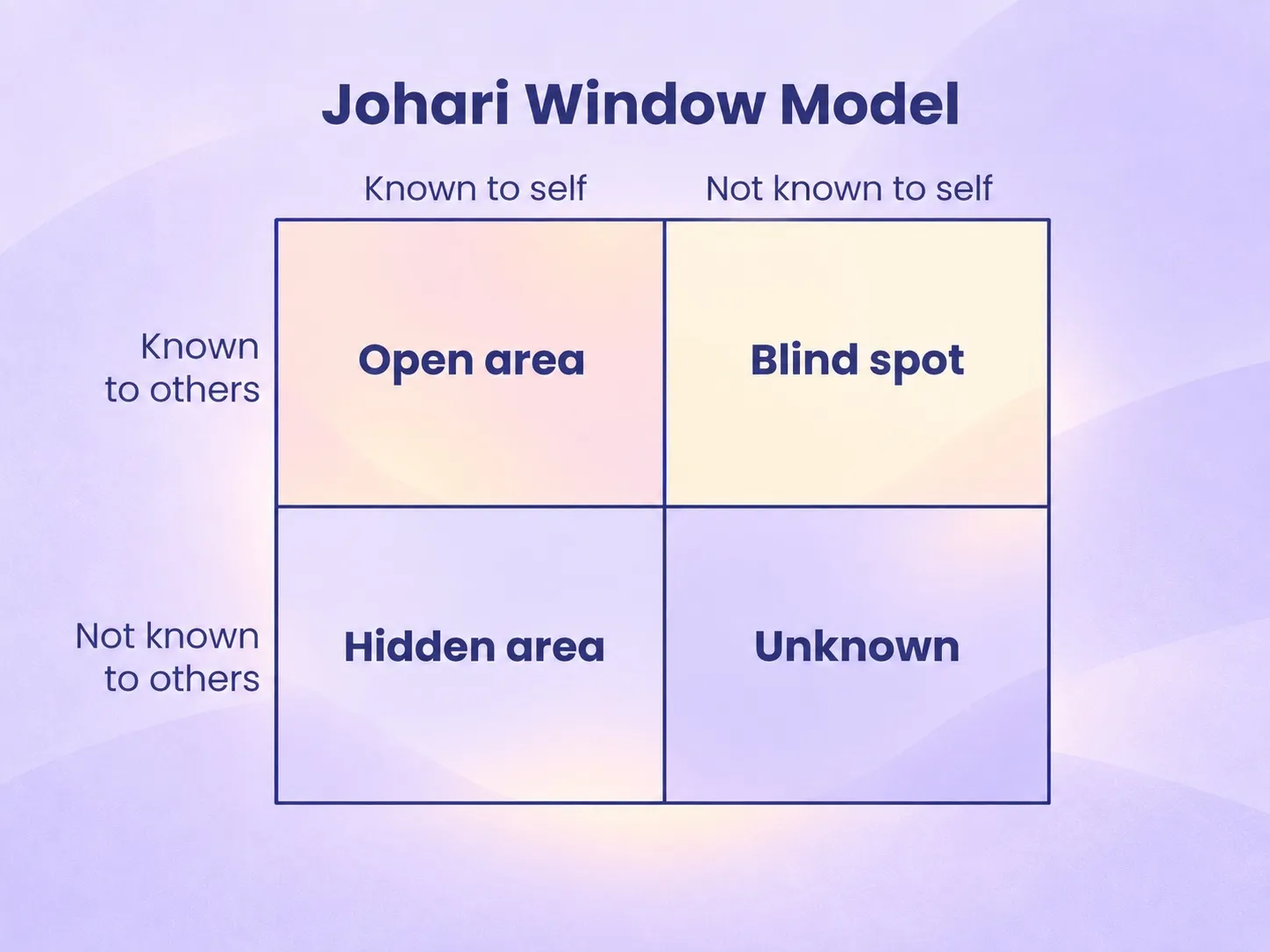
Most feedback-style advice skips the number and tells you to adapt to personality instead: direct versus indirect, blunt versus diplomatic. The trouble is you rarely know someone’s preferred style walking into a first real conversation with them, and guessing wrong costs you their trust before you’ve said a word about their work. The rating gap is different. If you’ve run any kind of structured review, self-assessment alongside peer input, it’s already sitting in the data. You don’t have to guess.
Imagine a team lead who rated their own communication a 5 out of 5. Their peers, on the same question, averaged a 3, and two of the written comments mention meetings running long with no clear outcome. If the feedback conversation opens with reassurance and a few minor notes tacked on, nothing changes. The gap between their self-image and what peers experienced doesn’t shrink. It just gets confirmed again.
The fix isn’t a harsher tone. It’s specificity that leaves no room to file the feedback away as one person’s opinion. “Communication could improve” is exactly the kind of comment an overrater dismisses, because it’s vague enough to not be about them specifically. “In three of the last four planning meetings, we ran twenty minutes over without agreeing on next steps” is a fact, and facts are what actually move someone who’s confident they’re already doing well. For more examples like this, see 360 feedback examples.
This is also where reading the distribution instead of the average matters most. An overrater will happily discount a single peer’s comment as one person’s grudge. Three separate reviewers describing the same meeting pattern is much harder to wave away.
Picture a newer manager who rated their own delegation a 2 out of 5, convinced they’re dropping the ball. Peers rated the same competency a 4, several specifically praising how clearly this manager hands off ownership. If a review conversation with this person opens by listing three growth areas back to back, even minor, specific ones, it confirms a fear they already carry into the room rather than giving them anything useful to act on.
Lead with what peers actually said was working, and be as specific about the strengths as you’d be about a weakness with anyone else. Growth areas still belong in the conversation; feedback that only praises stops being feedback. But they arrive one at a time, spaced out, rather than delivered as a list. Gentle here means paced: the growth area itself should be just as specific as it would be for anyone else, delivered on its own instead of bundled with two others.
How you sequence this also depends on how the person generally handles a hard conversation. Someone who needs time to sit with something benefits from spacing growth areas across more than one conversation rather than packing them into one.
Some people trust an argument more than they trust warmth, regardless of what their self-rating shows. You’ll spot this less from the ratings and more from how they’ve responded to feedback before: they ask for the source, push back on generalizations, and only shift their view once they’ve seen the evidence themselves.
Treat this as an axis separate from the self-peer gap rather than a subset of it. Someone can rate themselves accurately and still only respond to hard evidence. Someone can overrate themselves and be perfectly receptive to a gentler opening. The two patterns often overlap, but not always.
The move here is the same discipline the overrater case calls for: claims backed by a specific instance rather than a generalization. “You could be more thorough with code review” invites an argument. “Two of the last three pull requests you approved had a failing test that wasn’t caught until staging” gets a different kind of attention, because there’s nothing to argue with, only something to address.
When the numbers roughly agree, the conversation is the easiest of the four, and it’s tempting to coast on that ease by staying vague, since there’s no gap to manage. Resist it. Hold this case to the same specificity standard as the other three: weight strengths and growth areas evenly, and back every point with a real example rather than a general impression.
None of the four cases above matter much if the conversation ends and nothing survives it past the meeting. Close every feedback conversation, whatever the gap looked like going in, with a short written recap: two or three sentences, shared with the person, naming what was covered and what happens next. Not a transcript. Not a rehash. Just enough that the person has something to refer back to next week, and enough that it can become the first line of an actual development plan instead of a memory of an uncomfortable half hour.
This step is missing from almost every generic feedback-style guide, and it’s the cheapest, highest-value part of the whole conversation. Writing three sentences after a meeting you already had takes two minutes. Skipping it means the only record of what was said lives in two people’s memories, which is exactly how the same feedback ends up being delivered again in six months because nothing changed.
The recap above is the short version. For the fuller conversation itself, how to deliver feedback results without breaking trust covers the handoff in more depth.
What is a feedback style?
A feedback style is how you sequence, frame, and pace feedback for the person in front of you, separate from what you actually say. Most advice treats this as a personality-matching exercise. The version that actually helps is simpler: read the gap between how someone rates themselves and how their peers rated them, and let that decide the opening move.
How do you give feedback to someone who rates themselves higher than their peers do?
Open with the growth areas rather than the praise, and back every point with a specific example a reviewer actually gave. A soft opening or generic praise just confirms the gap that’s already there. What moves someone in this position is evidence they can’t easily dismiss as one person’s opinion.
How do you give feedback to someone with low self-confidence?
Open with genuine, specific strengths rather than generic encouragement, and deliver growth areas one at a time instead of stacking them into a list. The goal is pacing: specific points that arrive slowly enough that the conversation doesn’t just confirm a fear the person already carries into the room.
Why do some people only respond to feedback backed by evidence?
Some people process feedback through argument rather than through relationship or tone, and no amount of warmth in the delivery changes that. The fix is the same one that works for someone who overrates themselves: a specific example behind every claim, concrete enough that there’s nothing left to argue with.
What should you do after a feedback conversation ends?
Write a short recap, two or three sentences, and share it with the person. It should name what was covered and what happens next, in place of repeating the whole conversation. That short recap is what turns a single conversation into the start of an actual development plan instead of something that gets forgotten by the following week.
Trying to find one feedback style that works on everyone is the wrong project. What actually works is reading one number before you open your mouth: how far this person’s self-rating sits from what their peers said, and whether they’re someone who needs evidence more than most people do regardless of that gap. Everything else, tone, pacing, how much praise comes first, follows from that.
If you’re running structured reviews and already have self and peer ratings sitting side by side, look at the gap on the report before you write a word of what you’re going to say. If you’re working from a single one-on-one instead, ask the same competency questions to a few of the person’s peers first, even informally, before deciding how to open. The gap tells you more than a guess ever will.
Want to see it for your own team? Start your first review in Lynxify.me, no annual contract, set up in about fifteen minutes.
Dmytro Shtapauk
Practical tips and experience from top-notch experts